About LifeLoggerz
About LifeLoggerz · the archive, system, and philosophy
A searchable record of a life in progress.
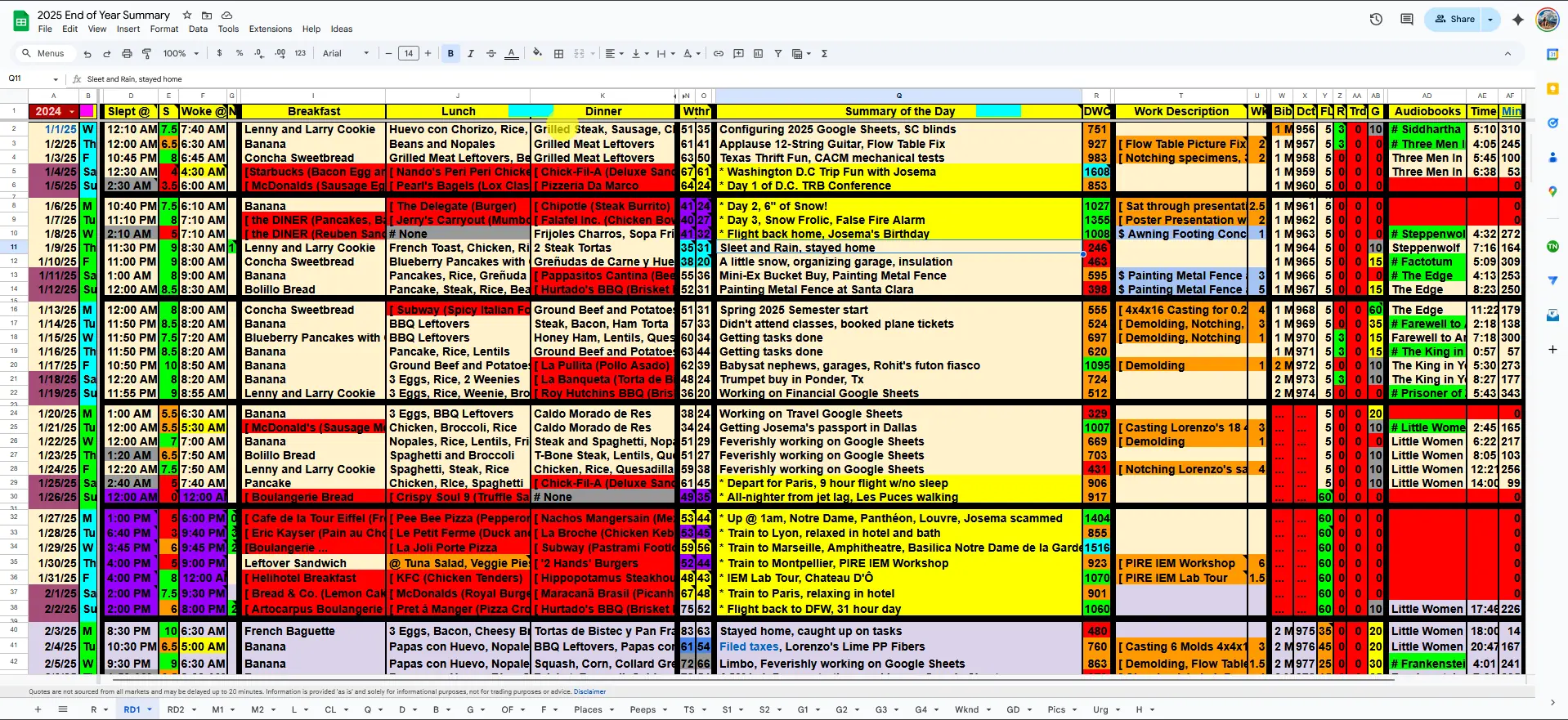
LifeLoggerz began as personal logging and grew into something harder to describe with one label: part data system, part diary archive, part memory aid, part experimental laboratory, and now part public toolkit.
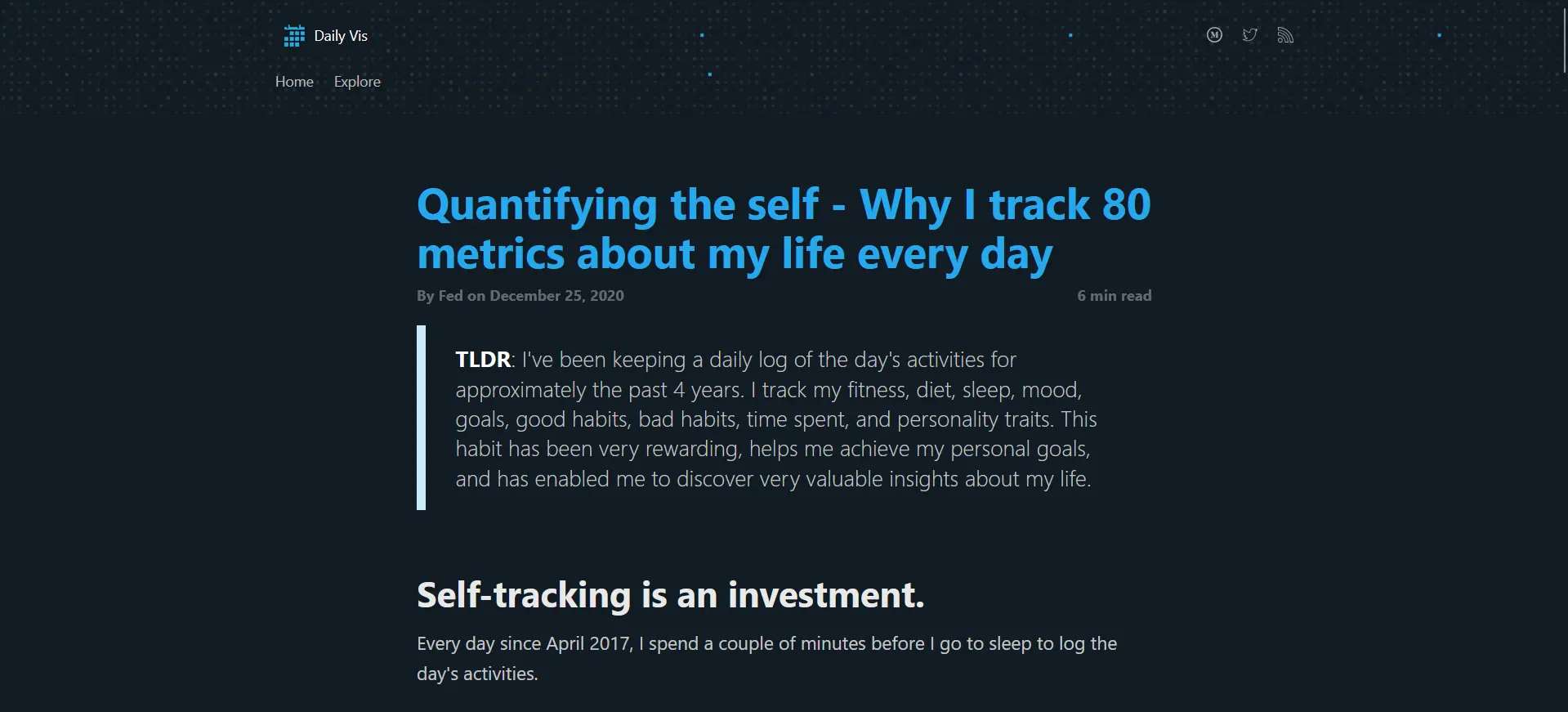
The purpose is not to turn life into a spreadsheet. It is to preserve more of what happened, make patterns easier to see, reduce repeated work, and build an archive that becomes more useful as the years accumulate.

Why it exists
Memory fades. Ordinary life deserves a second life.
Most days are made of small things that seem too ordinary to preserve until years have passed. LifeLoggerz gives those days enough structure to be found again—not so every minute can be optimized, but so memories, patterns, work, interests, mistakes, and changes do not have to depend entirely on recollection.
What I track
There is no single “LifeLoggerz metric.”
More than 150 variables and many non-numeric records have accumulated over time. The point is not the raw count; it is that different parts of life deserve different kinds of evidence. Click a category to focus the examples below.
How it became this
You can see the system learning what it wants to be.
There was no master plan. Each useful layer survived; other ideas were simplified, automated, or abandoned when the maintenance stopped being worth it.
Diary habit became structured tracking
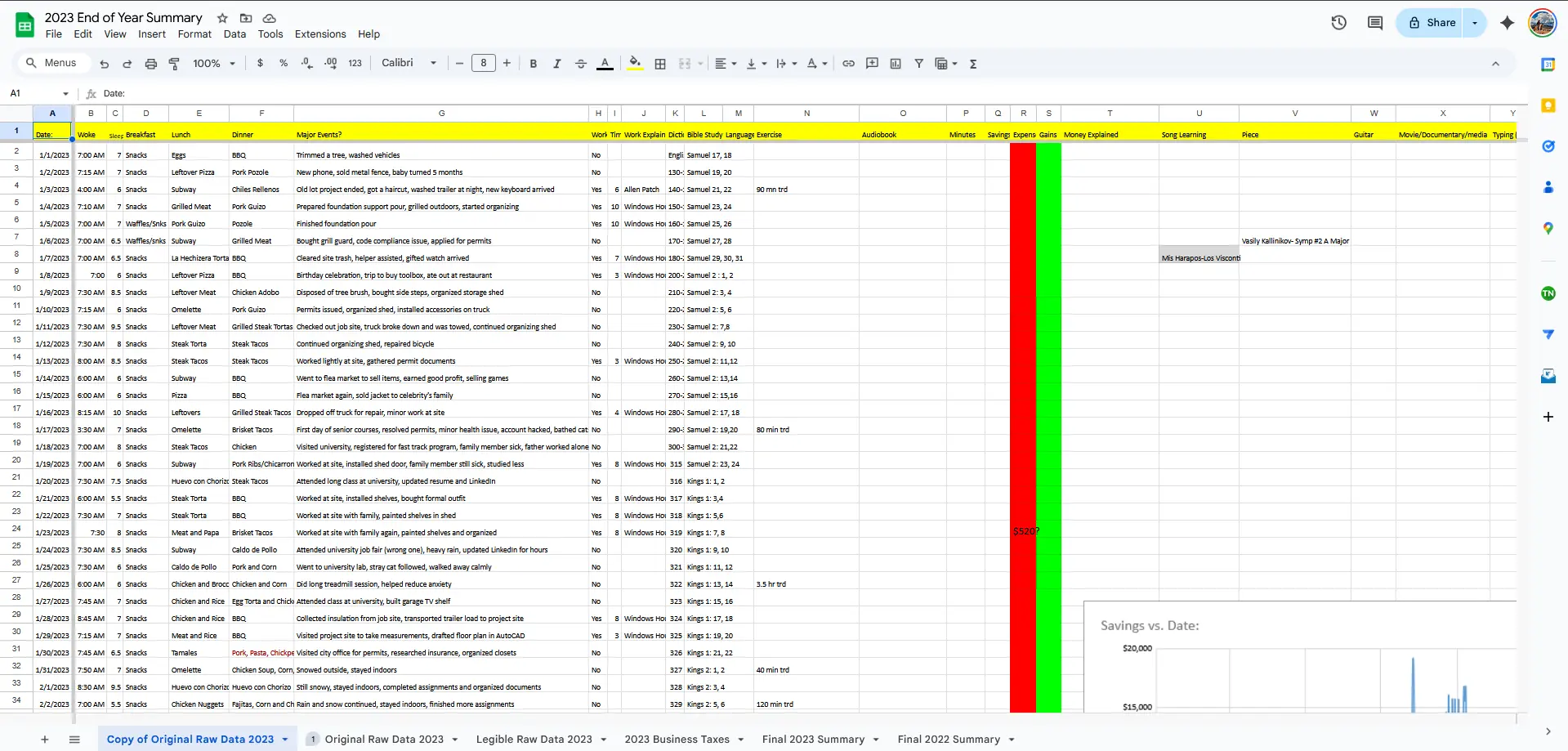
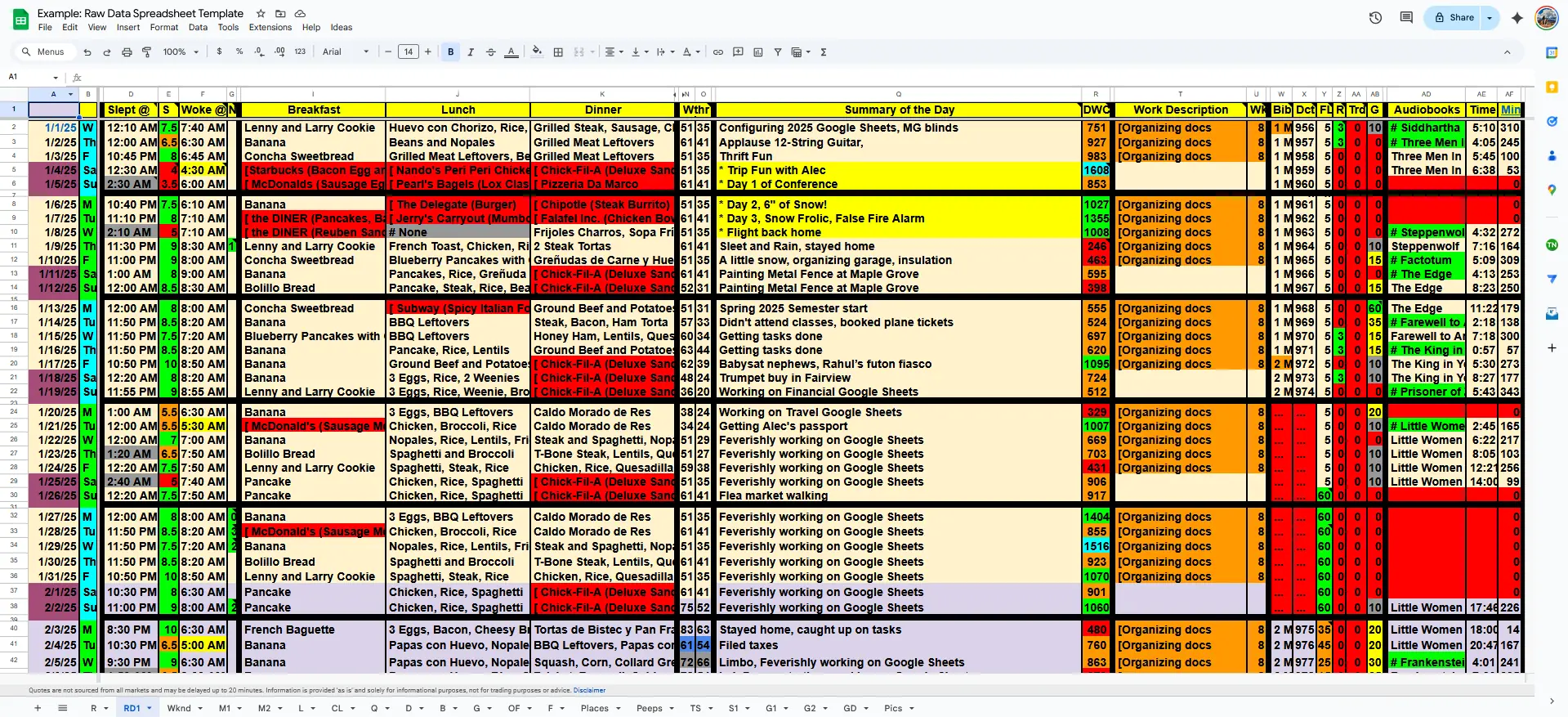
Daily writing came first. In 2023, recurring details moved into a sheet that could be counted, filtered, and compared.
The sheet started becoming a system
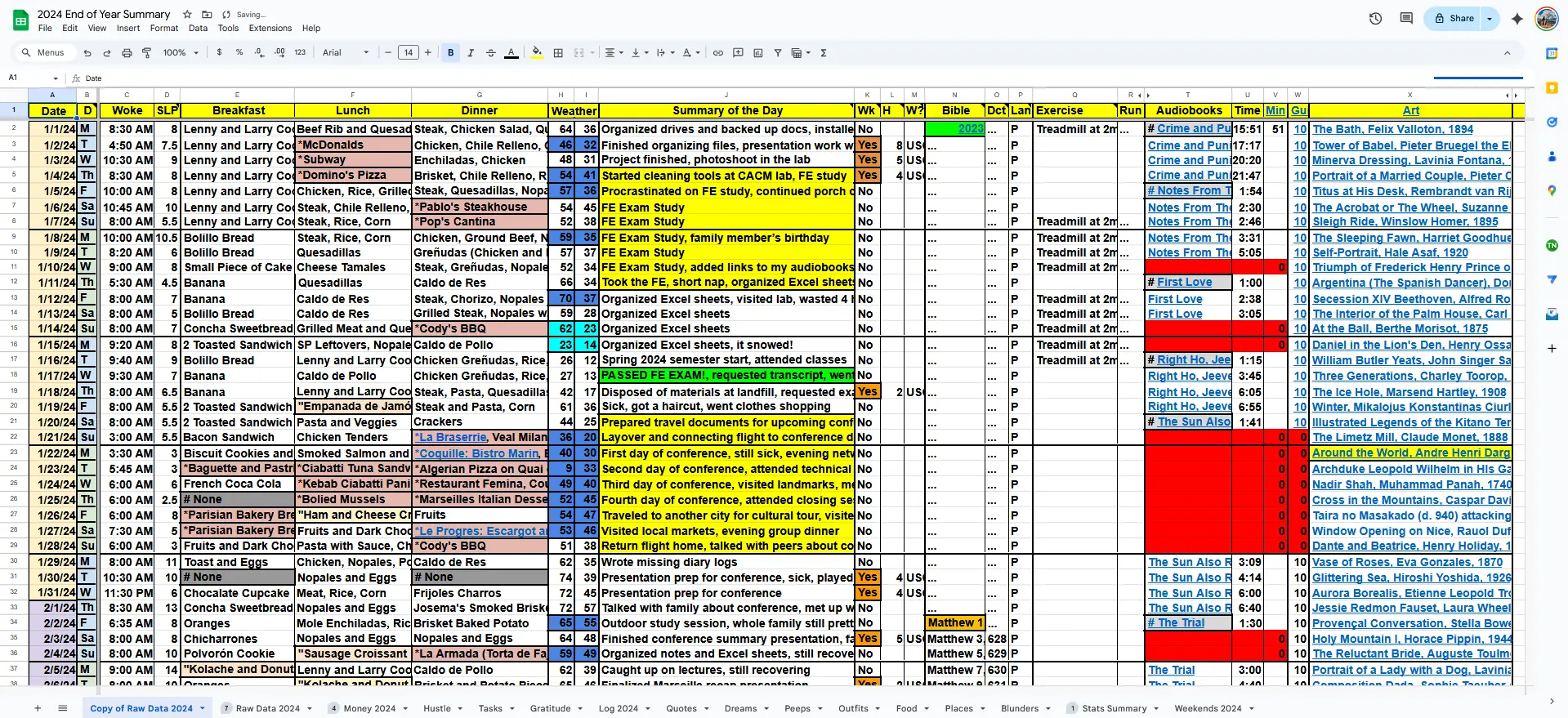
More categories, graphs, formulas, and repeatable workflows made the archive useful beyond the day it was recorded.
Expansion met diminishing returns
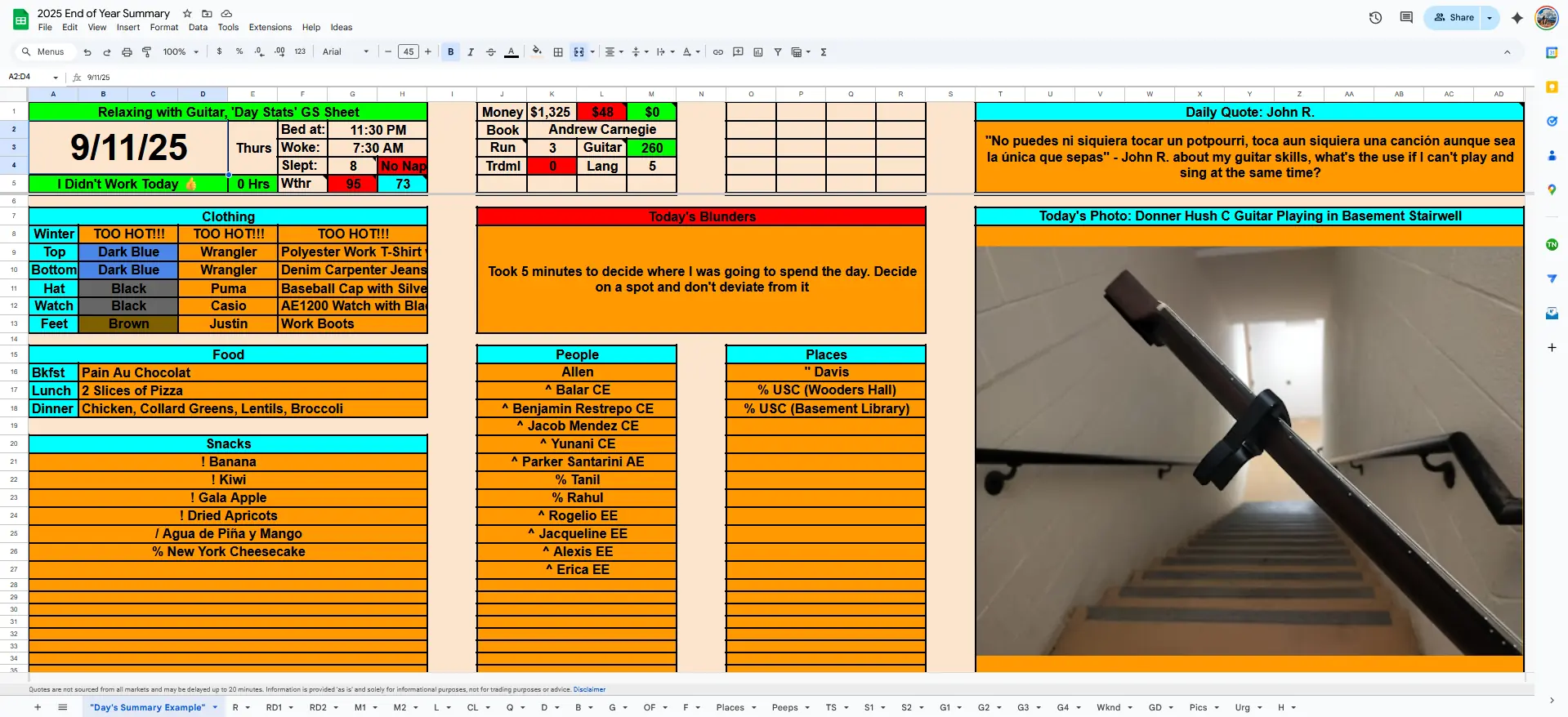
Automation and complexity grew, but so did a clearer rule: a field has to earn the attention required to maintain it.
The private archive turns outward
LifeLoggerz now exposes public-safe explorers, stories, templates, and interfaces without publishing the unrestricted archive beneath them.
Why computer logging?
A paper journal remembers. A digital archive can also answer.
Paper can preserve a life beautifully. Digital structure fits this project because years of records can also be retrieved, compared, visualized, filtered, and eventually questioned. Try the four examples.
Example archive search
Example comparison
The archive can show sustained phases instead of reducing them to a lifetime total.
Absence becomes visible too: what stopped, what returned, and what competed for time.
Example visualization
The same repeated records can become calendars, timelines, maps, distributions, or data stories.
Example archive question
What I don't track
The archive has edges on purpose.
LifeLoggerz is expansive, but it is not a contest for maximum data density. Some categories sit inside the core; others remain occasional, secondary, or deliberately outside it.
Inside the core
Records that repeatedly earn their place
These are useful because they preserve memory, expose patterns, support a pursuit, or gain meaning over time.
Outside / secondary
Measurable does not automatically mean worth maintaining
- ×Continuous biometric streams or wearables simply because they can collect data.
- ×Calories, heart rate, and screen time as default daily targets.
- ×Perfect minute-by-minute reconstruction of every day.
- ×Data whose maintenance costs more attention than it returns.
- ×Private information simply because it would make an interesting chart.
The philosophy
LifeLoggerz principle № 1The archive serves the life. The life does not serve the archive.
The system can grow indefinitely; attention cannot. Every field, automation, chart, and public page has to justify the time it asks for.
Useful records stay. Repetitive work gets automated. Private context can remain private. Anything that costs more attention than it returns should be simplified or removed.
Before adding another metric
Memory, context, patterns, a pursuit, or information that becomes more valuable over time.
Let formulas, scripts, or APIs remove routine work without obscuring the source.
The archive can retain value without turning private context into public entertainment.
If a field creates friction without clarity, reduce it, demote it, or let it disappear.
The goal is not maximum data density. It is a system that keeps returning attention to life.
Start much smaller
You do not need 150 variables. Start with one useful thing.
Borrow the system rather than copying the scale.